

By Pedro Cayuqueo
Parra, a Mapuche by Nature
Parra's closeness to our culture also led him to connect with the poets of Wallmapu. In 1994 Elicura Chihuailaf and Jaime Valdivieso invited him to the “Zugutrawun” (Gathering of the Word), a meeting of Mapuche and non-Mapuche writers in Temuco. Poets of the stature of Gonzalo Rojas, Armando Uribe and Jorge Teillier attended, but Parra, dressed in the traditional way with a manta and a trarilonko, was the absolute protagonist of the event.
Original in Spanish See the original
Tamaño de letra
Interlineado
Contraste
Se recuerda en este equipo. Con tu cuenta, se guarda en tus preferencias y te sigue en todo el sitio.

Once, Nicanor Parra was asked who his favorite Chilean author was. “Pascual Coña,” he answered. If you need to read Shakespeare to know the English, he added, you must read Coña to know the Chileans. The poet was referring to the renowned lonko of the late nineteenth century, whose memoirs were transcribed by the Capuchin father Ernesto Wilhelm de Moesbach. In them Coña recounts the last decades of Mapuche freedom, the military resistance and the dispossession that followed, an account that moved the poet for its nobility and authenticity.
“When I read Pascual Coña I see Chile for the first time,” he told Paula magazine in 1998. The poet is right. To know Chile and the Chileans it is almost obligatory to read Pascual Coña. In the pages of that book they appear portrayed just as they are. Or just as they were in those times of greed, racism and rural violence. Parra lived in Lautaro, where he met the Mapuche, learned the protocols of greeting, learned to count in mapuzugun and immersed himself in the philosophy of our elders. From that knowledge was born one of his most famous “artifacts”:
Muchos los problemas
Una la solución:
Economía Mapuche de Subsistencia
This was part of the Biobío Speech, delivered in 1996 after he received an honorary doctorate from the University of Concepción. In that text Parra takes positions on global issues that trouble him. One of them is the environment. “Ni socialista ni capitalista / sino todo lo contrario / ecologista / intransigente,” he reflects before the academic community. In his view, part of the secret to saving the planet lay in the non-consumerist Mapuche vision. “It seems to me one of the few serious, fundamental things I could say,” he stressed that same year in another speech at the Chilean North American Institute of Culture.
Hence, perhaps, his warning at the University of Concepción:
A sea quien sea
Depredadores
manga de langostas
Un poquitito de sentido común
Llévense el cobre
llévense en cochayuyo
Llévense los mariscos + deliciosos
La albacora
los locos
la centolla
Prácticamente ya no queda nada
Pero cuidado con el bosque nativo carajo
Se tendrán que batir con los mapuches!
Parra's closeness to our culture also led him to connect with the poets of Wallmapu. In 1994 Elicura Chihuailaf and Jaime Valdivieso invited him to the “Zugutrawun” (Gathering of the Word), a meeting of Mapuche and non-Mapuche writers in Temuco. Poets of the stature of Gonzalo Rojas, Armando Uribe and Jorge Teillier attended, but Parra, dressed in the traditional way with a manta and a trarilonko, was the absolute protagonist of the event. There he presented his poem “Hay Mapuches & Mapuches,” a text in a black-humor key about being Mapuche and its various interpretations, a discussion, at times harsh and controversial, that ran through the event and that Parra settled with irony.
Hay diferentes órdenes de mapuches
x adopción x raza x astucia
mapuches x conveniencia
mapuches hay x aire de familia
yo por mi parte
Soy un mapuche x derecho propio
mi padre es el Sol
y mi madre es el agua de la vertiente
(la culebra de la vertiente)
estoy en libre plática
pido que se me declare mapuche
no tengo ninguna idea preconcebida
Soy un mapuche x naturaleza
dudo que haya alguien más mapuche que yo.
But Parra went much further in his relationship with the great-grandchildren of Pascual Coña. He even became a militant of the cause. At 96, from his home in the seaside town of Las Cruces, the poet joined the long hunger strike being held by 32 political prisoners in various jails in the south, among them the leaders of the CAM. “I join the hunger strike (in good faith),” he told the media. He kept up his solidarity until the last minute of that protest in 2010, which lasted more than a hundred days. Return of lands, demilitarization of the communities and non-application of the Anti-Terrorism Law were the demands of the Mapuche prisoners.
The same as yesterday. The same as today.
Source at www.pedrocayuqueo.cl
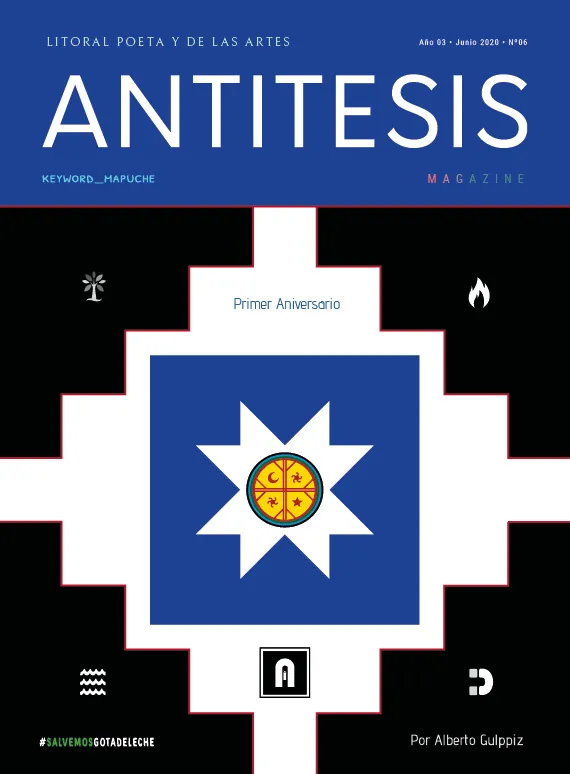
Also published in the sixth edition of Antítesis Magazine
Las columnas expresan la opinión de sus autores.
Creadores mencionadosLos aludidos

Keywords
CommentsReplies
Nadie ha dejado huella todavía. Deja la primera.


